
Endoscopy is a procedure that allows a physician to look at the inside of the human body. Initially, the endoscopy was used only in the esophagus, stomach and colon. Now doctors use endoscopy to diagnose ear, nose, throat, heart, urinary tract, joints and abdomen.
What is an endoscope?
During an endoscopy, the doctor inserts a tool called an endoscope into the human body. Most endoscopes are thin tubes with powerful light and a tiny camera at the end.
There are several types of endoscopes. The length and flexibility of the endoscope depend on the part of the body that the doctor should see. For example, an endoscope that helps a doctor examine joints is often tough. However, the one who used to look inside the colon is flexible.
Other tools used during endoscopy
As a rule, the endoscope has a canal through which the doctor inserts instruments for tissue collection or treatment. These tools include:
- Flexible tweezers, a tool that looks like tweezers for a tissue sample
- Biopsy tweezers to remove tissue samples or suspicious growth
- Cytological brush for taking cell samples
- Pin to remove forceps to remove seams inside the body
Why you might need an endoscopy
Your doctor may recommend an endoscopy for a variety of reasons:
Test and prevent cancer. For example, doctors use a type of endoscopy called a colonoscopy to extract colorectal cancer. During a colonoscopy, your doctor may remove growth, called polyps, which can develop into cancer.
Diagnose the disease or find out the cause of the symptoms. The type of endoscopy recommended by your doctor depends on the body of the body that needs to be studied.
To give the treatment. These procedures include:
- Surgery through small cuts in the skin is called laparoscopic surgery
- Laser therapy, using a powerful beam of light to destroy cancer cells
- Microwave ablation, using heat to destroy cancerous tissues
- Surgery using an endoscope inserted into the gastrointestinal tract is called an endoscopic resection of the mucous membrane or endoscopic cleft of the subcutaneous tissue
- Photodynamic therapy that destroys the tumor by laser after introducing its photosensitive substance
- Medicine
Types of Endoscopy
The most common types of endoscopy are given below. Doctors conducting endoscopy are fully trained to learn about these procedures. They also participate in continuing education to learn about new developments in technology.
| Name of procedure | Name of the instrument | Area or body reviewed | How the endoscope reaches the target area |
| arthroscopy | arthroscope | joints | Insert through a small incision over the area to be viewed |
| bronchoscopy | bronchoscope | Trachea (fracture) and bronchial tubes | Inserted through the mouth |
| colonoscopy | colonoscope | The entire length of the large intestine and large intestine | Inserted through anus |
| colposcopy | colposcope | Vaginal and cervical | The mirror is inserted into the vagina. The colposcope is placed at the opening of the vagina, but does not enter into it. |
| cystoscopy | cystoscope | Inside the bladder | Inserted through the urethra |
| esophagoscopy | esophagoscopy | esophagus | Inserted through the mouth |
| gastroscopy | Gastroscopy | Stomach and duodenum (beginning of small intestine) | Inserted through the mouth |
| laparoscopy | laparoscope | Stomach, liver or other abdominal organ, including female genital organs (uterus, ovaries, fallopian tubes) | Inserted through a small surgical opening in the abdomen |
| laryngoscopy | laryngoscopes | Larynx (voice box) | Inserted through the mouth |
| neuroendoscopy | neuroendoscope | Areas of the brain | Inserted through a small incision in the skull near the viewing area |
| Proctoscopy | proctoscope | Rectal and sigmoid colon | Inserted through anus |
| Sigmoidoscopy | Sigmoidoscope | Sigmoid colon (lower part of gut) | Inserted through anus |
| thoracoscopy | Thoracoscope | Pleur, covering the lungs and structures covering the heart | Inserted through a small surgical opening in the chest |
Preparation for endoscopy
Before you begin, contact your insurance provider. Find out if it covers the cost of the procedure, and maybe you will have to pay a portion.
Your health care team will give you detailed training instructions for your appointment. For example, you may need to do the following:
- Avoid eating or drinking anything for a few hours before the procedure.
- Stop taking blood medications a few days before the procedure. This reduces the risk of bleeding. Ask your doctor about what medications you can stop and how long.
- Pick up a laxative or use an enema to clean the bowel from the stomach. Only some types of endoscopy require this drug.
What to expect during the procedure?
When you arrive at your endoscopy, your medical team will ask you to sign the consent form. This form indicates that you understand the benefits and risks and agree to the procedure. Talk to your doctor about any endoscopy-related issues.
For most endoscopic procedures, you will not have to stay in the hospital overnight.
You can get type of anesthesia depending on the type of endoscopy. Anesthesia blocks awareness of pain. The type used will determine whether you are ready, feel free or fall asleep during the procedure.
During the entire procedure, your medical team will monitor your temperature, blood pressure and heart rate. Your doctor examines and, in some cases, records an image from the endoscope. He or she will also perform any procedures. This may include the collection of tissues for testing.
What to expect after the procedure?
After the endoscopy, you are resting in the recovery area. You can observe mild side effects. Side effects depend on the type of endoscopy. They may include pains, dry throats, or bloating and gas.
If during the procedure you received certain types of anesthesia, you will have someone drove you home.
Reasons to call a doctor after an endoscopy
Problems with endoscopy are infrequent, but they can happen. These include a hole or tear in the examined area, bleeding and infection.
Talk to your doctor immediately if you have any of these symptoms:
- Fever
- Vomit
- Chest pain
- Abnormal stool
- Dyspnea
- Severe abdominal pain or other unusual symptoms
Progress in endoscopy
New methods continue to make endoscopy more comfortable for patients. It also makes it easier for doctors to diagnose diseases.
Virtual endoscopy. Unlike the standard endoscopy, the doctor does not insert an endoscope into the body. These tests include computer tomography (CT) scans of thin body segments. The computer combines these images to create a more complete view. Researchers continue to study these and other types of virtual endoscopy:
Virtual colonoscopy. Patients who have this test should still be monitored for the same intestinal cleansing drugs. And they need a traditional colonoscopy if polyps are found.
Virtual bronchoscopy
Capsule endoscopy. For this type of endoscopy, a patient swallows a small capsule with a vitamin with a camera. The camera takes pictures inside the esophagus, stomach and small intestine. Images are recorded to the device you are wearing for about 8 hours. The doctor examines them. Although capsular endoscopy is not new, researchers continue to make progress in this.
Related Products
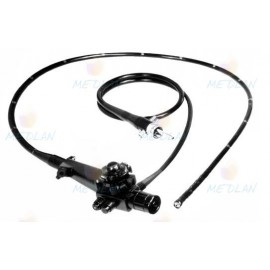
Bronchoscope with fiber optics D-IN-3-1 "LOMO"
Production of "LOMO", St. Petersburg, RussiaRegistered in the Ministry of Health of Ukrain..
₴ 155,000.00 грн.
-«ЛОМО»-270x270.jpg "Gastroduodenoscopy HDB-IN-G-23 (9.5) - \"LOMO\"")
Gastroduodenoscopy HDB-IN-G-23 (9.5) - "LOMO"
Production of "LOMO", St. Petersburg, RussiaRegistered in the Ministry of Health of Ukrain..
₴ 245,000.00 грн.
-«ЛОМО»-270x270.jpg "Colonoscope CB-IN-G-20 (13.6) - \"LOMO\"")
Colonoscope CB-IN-G-20 (13.6) - "LOMO"
Production of "LOMO", St. Petersburg, RussiaRegistered in the Ministry of Health of Ukrain..
₴ 265,000.00 грн.